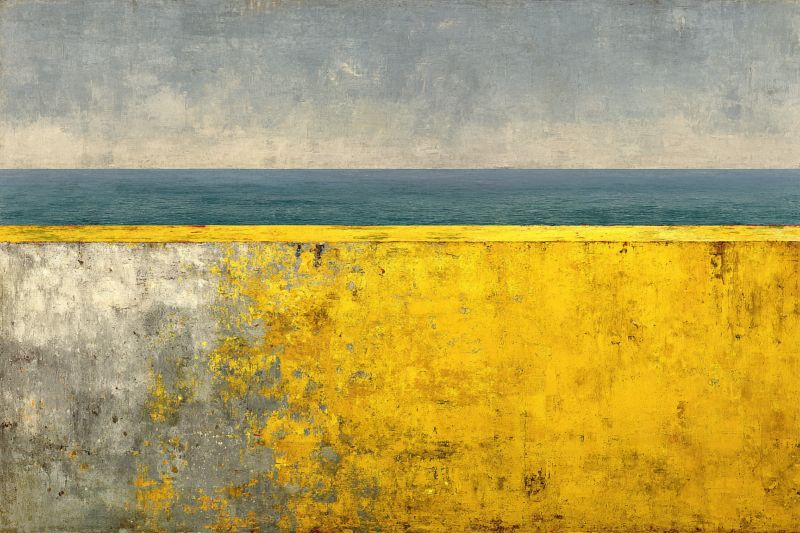
There is a particular kind of homelessness that has nothing to do with shelter. You have a roof. You have an address. You may even have furniture you chose and a neighborhood you can describe to strangers. But the feeling persists: this is not quite yours. The city holds you the way a waiting room holds you. Temporarily. Functionally. Without recognition.
Cities were supposed to be the great gathering. The place where strangers became neighbors, where cultures collided and produced something new, where the sheer density of human life generated belonging by proximity. And sometimes they do. But more often, for more people, the city is a place you move through rather than a place you land. The rent rises. The neighborhood changes. The coffee shop where you recognized the barista becomes something else. You adjust. You relocate. You learn to carry home inside yourself because the external version keeps being revised without your consent.
The thinkers gathered here have walked these streets. They have written about the loneliness of crowds, the rootlessness of migration, the strange grief of living somewhere that does not know you are there. They are not against cities. They are witnesses to what cities cost when belonging becomes a luxury item.
I.
“I had been wandering. I had been wandering for so long that I had forgotten what it felt like to arrive.”
Teju Cole · Open City, 2011
Cole’s narrator walks through Manhattan and Brussels the way a camera moves through a landscape: recording everything, belonging to nothing. The novel is structured as a drift, a series of encounters and observations that never quite add up to a home. The wandering is not adventure. It is the condition of a mind that has been displaced too often to mistake any single place for permanence.
II.
“Loneliness is the experience of living in a city and realizing that the proximity of others does not guarantee the presence of others.”
Olivia Laing · The Lonely City, 2016
Laing wrote her study of urban loneliness while living alone in New York, surrounded by millions and known by almost no one. The city did not cause her loneliness. It framed it. It gave it architecture: the apartment wall thin enough to hear your neighbor and thick enough to never meet them. Proximity without contact. Density without connection.
III.
“Walking is a way of being in the world. It is a way of knowing a place with the body, not just the mind.”
Rebecca Solnit · Wanderlust, 2000
Solnit reclaims walking as a form of attention in cities that have been designed for cars, commutes, and speed. To walk a city is to know it at the pace of the body, to notice what the windshield obscures: the cracked sidewalk, the hand-lettered sign, the face of someone who is also walking and also alone. The city reveals itself to the person who moves slowly enough to receive it.
IV.
“The global economy does not just move capital. It moves people. And the people it moves are often expelled from the places that made them.”
Saskia Sassen · Expulsions, 2014
Sassen maps the forces that uproot. Gentrification, land grabs, austerity, climate displacement: each produces a population in motion, not because they chose to move but because the ground beneath them was sold, developed, or rendered uninhabitable. The city absorbs these arrivals and forgets they were expelled. The skyline looks like progress. The displacement is invisible from above.
V.
“The creative class was supposed to revitalize cities. Instead, it priced out the very communities that made those cities worth living in.”
Richard Florida · The New Urban Crisis, 2017
Florida, who coined the term creative class, returned years later to reckon with its consequences. The artists, designers, and entrepreneurs he celebrated did revitalize neighborhoods. And then the revitalization attracted investment, and the investment attracted developers, and the developers attracted rents that the original residents could not pay. The vitality was real. The displacement was its shadow.
VI.
“Bombay is a city built on the idea that there is always room for one more. The problem is that the room is imaginary.”
Suketu Mehta · Maximum City, 2004
Mehta writes about Mumbai with the precision of someone who loves a place too much to romanticize it. The city absorbs millions. It does not accommodate them. It stacks them, compresses them, assigns them slivers of space and expects gratitude for the proximity to opportunity. The room exists in the imagination of the city’s mythology. The bodies exist in its reality.
VII.
“The city is no longer a place. It is a condition. And the condition is one of perpetual transit.”
Rem Koolhaas · public lectures, 2014
Koolhaas, one of the most influential architects of the past half-century, describes the modern city not as a location but as a mode of being. You do not live in the city. You pass through it. The commute, the layover, the temporary lease, the coworking desk: each is a form of transit disguised as arrival. The city is not where you are. It is what you are moving through.
VIII.
“Cities are the greatest invention of the human species. They make us richer, smarter, healthier. They also make us lonelier, if we let them.”
Edward Glaeser · Triumph of the City, 2011
Glaeser’s optimism about cities is genuine and data-driven. Urban density produces innovation, cultural exchange, and economic mobility. But he acknowledges the cost buried in the aggregate: the individual who contributes to the city’s statistical success while experiencing none of its warmth. The city triumphs. The person inside it may not.
IX.
“A city is not just buildings and streets. It is the accumulation of daily encounters between strangers who learn, over time, to become neighbors.”
Jane Jacobs · The Death and Life of Great American Cities, 1961
Jacobs understood that a city’s life is not in its architecture but in its sidewalks. The casual nod from the shopkeeper, the familiar face at the bus stop, the children playing where adults can see them: these small, repeated encounters are the infrastructure of belonging. When the neighborhood turns over too quickly for these encounters to accumulate, the city loses the very thing that made it livable.
X.
“To be an immigrant is to carry two places inside you at all times and to be fully present in neither.”
Pico Iyer · The Global Soul, 2000
Iyer writes as someone who belongs everywhere and nowhere: born in England to Indian parents, raised in California, living in Japan. The global soul he describes is not homeless in the material sense. It is homeless in the gravitational sense. There is no single place that pulls hard enough to feel like the center. The world is available. The anchor is missing.
XI.
“I left Lagos for America and discovered that I was Black. In Lagos I was just Ifemelu.”
Chimamanda Ngozi Adichie · Americanah, 2013
Adichie captures a particular violence of urban migration: the city does not just receive you. It reclassifies you. The identity you carried from home is replaced by the identity the new city assigns. You arrive as a person and become a category. The city that promised possibility begins by stripping you of the self you arrived with.
XII.
“One day the doors simply appeared. And people began to leave. Not because they wanted to, but because staying had become impossible.”
Mohsin Hamid · Exit West, 2017
Hamid’s novel imagines migration as magical doorways that transport people from collapsing cities to new ones. The metaphor is thin by design: the magic is barely distinguishable from reality. People leave because the ground fails them. They arrive somewhere that did not expect them. The door closes behind. The city ahead does not know their name.
XIII.
“The children cross borders they did not choose. They arrive in cities built for other people’s children. And the city does not know what to do with them.”
Valeria Luiselli · Tell Me How It Ends, 2017
Luiselli worked as a translator for undocumented children in immigration court. Her essay is a record of what cities look like from the position of someone who has no right to be in them. The city is not hostile. It is indifferent. It was designed for residents, and the child standing in the courtroom is not yet a resident. They are a case number in a system that processes them without seeing them.
XIV.
“Identity is not a stone. It is a pattern, constantly being woven, and the threads come from every place you have lived.”
Amin Maalouf · In the Name of Identity, 1998
Maalouf, writing from the intersection of Lebanese and French culture, refuses the demand to choose a single belonging. The city dweller who has lived in three countries, spoken two languages, and buried a parent on a different continent does not have a fragmented identity. They have a woven one. But the world keeps asking them to pick a single thread and call it home.
XV.
“The liquid modern man has no fixed address, no stable community, no permanent ties. He is free in the way that a leaf blown by the wind is free.”
Zygmunt Bauman · Liquid Modernity, 2000
Bauman returns with the image that defined his later work: freedom as weightlessness. The urban dweller moves from city to city, job to job, relationship to relationship, unattached and unencumbered. The freedom is real. So is the loneliness that freedom produces when there is nothing solid enough to push against. The leaf does not choose its direction. It simply moves.
XVI.
“India is a country where the ancient and the ultramodern collide on the same street corner, and neither apologizes for the other.”
Sam Miller · A Strange Kind of Paradise, 2014
Miller, a British writer who has lived in Delhi for decades, captures the particular disorientation of Indian cities. The temple sits beside the tech park. The ox cart shares the road with the SUV. The city does not resolve its contradictions. It absorbs them. And the person living in it learns to hold incompatible realities simultaneously, which is either wisdom or exhaustion, depending on the day.
XVII.
“Belonging is not a place. It is a practice. It is something you do, over and over, in the small and ordinary moments of daily life.”
bell hooks · Belonging, 2009
hooks reframes the question. Belonging is not found in the city or the neighborhood or the apartment. It is enacted in the gesture, the routine, the repeated choice to show up and be present. The person who waters a plant on a windowsill in a rented apartment is practicing belonging. The practice does not require permanence. It requires attention.
XVIII.
“The other is being expelled. The same is proliferating. The modern city looks the same everywhere because difference has become economically inconvenient.”
Byung-Chul Han · The Expulsion of the Other, 2018
Han identifies the flattening that global capital performs on urban space. The same coffee chains, the same coworking aesthetics, the same curated minimalism from Brooklyn to Berlin to Bangalore. The city that once promised encounter with difference now delivers repetition. You can land anywhere and recognize everything. The recognition is not comfort. It is the absence of surprise.
XIX.
“The modern city is not loud because it has too many sounds. It is loud because it has no silence. There is no frequency reserved for the human being who needs to think.”
Georg Simmel · The Metropolis and Mental Life, 1903
Simmel, writing at the turn of the twentieth century, diagnosed the urban nervous system before anyone had a name for overstimulation. The city bombards the senses not with any single assault but with the relentless accumulation of stimuli that never pauses. The metropolitan personality he described, reserved, intellectual, emotionally guarded, is not a character type. It is a survival adaptation.
XX.
“We arrived in this country with nothing. We built something. And now the neighborhood where we built it has been sold to someone who will build something else.”
Suketu Mehta · This Land Is Our Land, 2019
Mehta returns to close the circle with the immigrant’s particular grief. The displacement is doubled: first from the country of origin, then from the neighborhood that became home in the new country. The city does not exile you. It simply becomes too expensive for you to remain. The eviction is not violent. It is economic. And it is experienced as the same loss both times.
Voices from the Past
Cities are as old as civilization, and so is the ambivalence they produce. The crowd thrills and overwhelms. The street liberates and alienates. The sheer mass of human presence promises community and delivers anonymity. These five voices, writing long before the subway or the skyscraper, understood that the city is not just a place. It is a negotiation between the human need for proximity and the human need to be known.
XXI.
“The pleasure of the flaneur is the pleasure of losing himself in the crowd, of becoming nobody in particular while watching everybody in general.”
Charles Baudelaire · The Painter of Modern Life, 1863
Baudelaire invented a figure that the modern city still produces: the walker who moves through crowds without joining them. The flaneur is not lonely. He is anonymous by choice. He watches the city the way a reader watches a novel, from a deliberate distance. But the distance Baudelaire celebrated has become, for millions who did not choose it, the default condition. The anonymity is no longer a pleasure. It is the only option available.
XXII.
“I am large, I contain multitudes. And this is the city where my multitudes live.”
Walt Whitman · Leaves of Grass, 1855
Whitman saw the city as a body. Not a body of buildings but a body of selves, layered, contradictory, teeming. His New York was not a place to arrive at but a place to expand into, a space capacious enough to hold every version of the self at once. The modern city still contains multitudes. It has simply stopped being interested in most of them.
XXIII.
“Everywhere I have gone I have found that no place and no amount of travel brings peace. The disturbance is not in the landscape. It is in the mind.”
Seneca · Letters to Lucilius, c. 65 AD
Seneca watched the Roman elite move from villa to villa, seeking relief from the same restlessness they carried with them. His observation anticipates the modern urban nomad who relocates from city to city looking for the right fit, the right energy, the right neighborhood, without recognizing that the dissatisfaction travels in the luggage. The city is not the problem. The expectation of the city is.
XXIV.
“Travelling leaves you speechless, then turns you into a storyteller.”
Ibn Battuta · The Rihla, c. 1355
Ibn Battuta travelled further than almost anyone in the medieval world, crossing continents over three decades. His observation carries a double truth for the modern migrant: the journey takes something from you, a fluency, a certainty, a rootedness, and gives something back in a different currency. You lose the ability to belong effortlessly. You gain the ability to describe what belonging means.
XXV.
“I went to the woods because I wished to live deliberately. I wanted to live deep and suck out all the marrow of life.”
Henry David Thoreau · Walden, 1854
Thoreau left the city for the woods. His withdrawal was not a rejection of human life but a rejection of human noise: the commerce, the gossip, the frictionless activity that passes for living. The modern city dweller who fantasizes about leaving, about the countryside, the cabin, the slower pace, is channeling the same impulse. The impulse is not to flee civilization. It is to recover the self that civilization buries under stimulation.
About the Thinkers
Amin Maalouf (b. 1949) is a Lebanese-French author. In the Name of Identity examines how overlapping cultural, national, and linguistic identities resist the demand for singular belonging.
bell hooks (1952-2021) was an American author, professor, and social critic. Belonging explores the intersection of place, race, and the practice of making home in a world that denies belonging to many.
Byung-Chul Han (b. 1959) is a Korean-born, German-based philosopher. The Expulsion of the Other examines how global homogenization eliminates difference and flattens the experience of urban space.
Charles Baudelaire (1821-1867) was a French poet and essayist. The Painter of Modern Life introduced the figure of the flaneur and established the vocabulary for understanding urban experience as both freedom and alienation.
Chimamanda Ngozi Adichie (b. 1977) is a Nigerian novelist and essayist. Americanah explores race, migration, and the reclassification of identity that occurs when moving between countries and cities.
Edward Glaeser (b. 1967) is an American economist at Harvard University. Triumph of the City argues that urban density drives innovation and prosperity, while acknowledging the inequalities cities produce.
Georg Simmel (1858-1918) was a German sociologist and philosopher. The Metropolis and Mental Life, published in 1903, remains one of the foundational texts on how city living shapes personality and perception.
Henry David Thoreau (1817-1862) was an American essayist, naturalist, and philosopher. Walden records his experiment in deliberate living and offers a counter-vision to the pace and noise of urban existence.
Ibn Battuta (1304-1368) was a Moroccan explorer and scholar. The Rihla, his account of three decades of travel across Africa, Asia, and Europe, remains one of the most remarkable records of movement and encounter in world literature.
Jane Jacobs (1916-2006) was an American-Canadian urbanist and activist. The Death and Life of Great American Cities, published in 1961, transformed urban planning by centering sidewalk life, mixed use, and community density over top-down redevelopment.
Mohsin Hamid (b. 1971) is a Pakistani-British novelist. Exit West uses magical realism to explore migration, displacement, and the experience of arriving in cities that were not designed for your arrival.
Olivia Laing (b. 1977) is a British writer. The Lonely City examines urban loneliness through the lives and work of artists who lived and created in isolation within densely populated cities.
Pico Iyer (b. 1957) is a British-American essayist and travel writer. The Global Soul explores the condition of belonging to multiple places and none, examining how global mobility produces both freedom and homelessness.
Rebecca Solnit (b. 1961) is an American writer and activist. Wanderlust traces the cultural, political, and personal history of walking, including its role as a way of knowing and inhabiting urban space.
Rem Koolhaas (b. 1944) is a Dutch architect, architectural theorist, and urbanist. His writings and lectures on urbanization, generic cities, and the condition of perpetual transit have shaped contemporary thinking about metropolitan life.
Richard Florida (b. 1957) is an American urban studies theorist at the University of Toronto. The New Urban Crisis revisits his earlier work on the creative class and confronts the inequality and displacement it helped produce.
Sam Miller (b. 1965) is a British writer and journalist who has lived in India for decades. A Strange Kind of Paradise examines Indian cities, history, and identity through the lens of long residence and cultural immersion.
Saskia Sassen (b. 1947) is a Dutch-American sociologist at Columbia University. Expulsions examines how global economic forces displace populations from land, labor, and livable environments.
Seneca (c. 4 BC-65 AD) was a Roman Stoic philosopher, statesman, and dramatist. His Letters to Lucilius address restlessness, travel, and the futility of seeking peace through changes of location.
Suketu Mehta (b. 1963) is an Indian-American journalist and author. Maximum City and This Land Is Our Land examine urban life in Mumbai and the politics of immigration with documentary precision and literary ambition.
Teju Cole (b. 1975) is a Nigerian-American novelist, essayist, and photographer. Open City follows a walker through New York and Brussels, exploring displacement, memory, and the experience of urban anonymity.
Valeria Luiselli (b. 1983) is a Mexican novelist and essayist. Tell Me How It Ends documents her work as a translator for undocumented migrant children in U.S. immigration courts.
Walt Whitman (1819-1892) was an American poet. Leaves of Grass celebrates the city as a body of human multitudes, embracing urban density as an expression of democratic possibility.
Zygmunt Bauman (1925-2017) was a Polish-British sociologist. Liquid Modernity describes a world in which social structures, relationships, and places of belonging no longer hold their shape, producing perpetual rootlessness.
Curated by Nishant Mishra / The Nervous Age · Words for a world that won’t sit still.

Leave a comment